More Than Just Therapy
I ❤️ being curious togetherAuditory processing issues led me to discover one of the most amazing supports I never knew I needed- a cognitive health coach! Together we've explored the bigger picture of wellness and the connection to all areas in life and how each can impact our satisfaction. Crafting strategies and authentic language to help me feel empowered is one of Taryn's superpowers. She is curious and empathic and has helped me improve my quality of life and given me H.O.P.E. The Well Brain offers a Health Coach consultation - if this resonates, it's worth connecting.

I ❤️ how safe I feel being vulnerableElizabeth Arnold at Elite Health Services, was able to see that trauma was keeping my body in a constant state of protection, compromising the reflexes that would support advanced motor, communication, and cognitive development restoration. I learned how using reflex patterns "awaken our sensory-motor memory to make it faster and easier for the nervous system to self-restore the impaired functions" - for me this included body movement, vision and hearing functions, as well as focus, memory recall, thinking processes, and emotional and behavioral regulation. I finally felt more whole, like my left side belonged to my body.
|
I ❤️ my big loud Cuban familia again For the 2 years following my stroke I struggled to understand and was told nothing was wrong with my hearing. That was true, I didn't lose hearing function, the problem was in processing - the point when the sound reaches the brain. Finding Dr. Datino at Audiology and Speech Solutions, someone who finally understood what I was going through, was a gift that helped me return to our ridiculously loud family and live music. If not for our continued work I would likely be hiding out living a very quiet and lonely life.
I ❤️ how strong I feel thereIn March of 2023 I saw a new neurologist who suggested we aggressively renew focus on PT and OT. I knew exactly where I needed to go- NJ Sports Spine & Wellness. Their client-centered approach brings PT and OT working more closely together than any clinic I've been to. They push me hard, to reach my goals - Maria and Rosie are a dynamic duo. My treatment plan is bonkers.
I'm doing things I never imagined being able to do prior to my stroke and I'm doing it! At this point I've stopped reminding them I'm a 50-year old, chubby stroke survivor because we all know I'll try my hardest to accomplish whatever task they lay out for me. I'm stronger in body, mind, and spirit. Follow neuro.ot_nj on Instagram to see me work. |

I ❤️ trusting the process"Sight is how little you can see. Vision is how much you can see!"
Similar to the struggles with understanding speech and sound, I did not lose sight but my vision was impacted. Mind-Body-World Optometry takes a comprehensive, holistic approach to neuro-optometric visual rehabilitation and Dr. Slotnick is intuitive and creative in her support. I've improved so much - including balance, the awareness of myself in space, and widening my window to the world. I've been able to create art again. 
I just ❤️ being thereTraditional OT couldn't pinpoint the issues I was having with my hand, then I found my friends at Rehabologym. Through their Neuro-Robotic Rehabilitation program and DATA we were able to set out a plan to address my concerns and fine tune my therapy. Although it's amazing, the tech is not what's magical at this clinic - it's the therapists' ability to make you feel seen, heard, and when I began a socially distanced hugged. I hesitated to post since they're local to NY, but could no longer resist - now they're offering TeleRehabilitation!
|
Help at Home
My Amazon Idea ListYou can check out Amazon purchases that I've found helpful and have come to rely on.
|
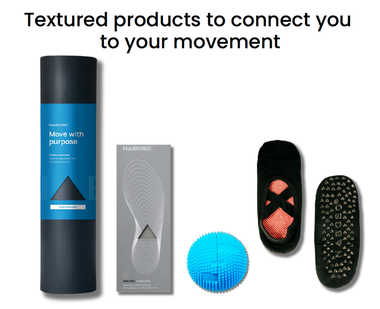
Naboso ProductseAs a result of the stroke, I have neglect and a lack of sensation on my left side - this makes me feel more like I'm floating rather than grounded. The texture of these Naboso products sends a signal to my brain, making me aware of my feet on the ground, allowing m to stand tall and my balance to improve.
Receive 10% off your purchase using this link and the discount code STROKE_MAVEN |
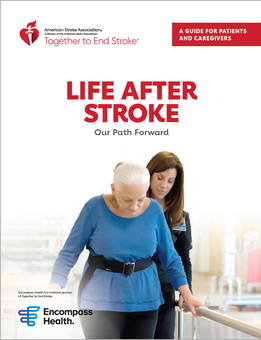
Life After Stroke GuideEvery stroke is different and that's why we're told there's no playbook. The truth is there are as many underlying similarities as there are difference. This is a helpful tool from the American Stroke Association.
You can find the Spanish version here. |
Community
I ❤️ their yoga and mindfulness programsIn April 2021 I attended the Love Your Brain Yoga & Facilitation Training: Mindfulness, Resilience, and Community. I'm both excited and super nervous to hold space for groups. In August I will be attending their retreat up in Maine. These retreats are free for participants, you can donate here to help pay it forward.
|

I ❤️ the amazing human who launched thisYouSoRock is a community space my buddy Joe Borges created for brain injury survivors and those with brain conditions to connect and support each other. You can go check it out now.
|
I ❤️ the community that has organically formed hereI've made so many great connections through the support groups hosted by and for brain injury survivors and warriors. Join the 2nd Chance in Life Group every Monday and Wednesday at 9pm EST.
|
I ❤️ how inspirational and aspiration it feelsTheir Brain Bar Salons and MiniBars have given me the power of conversation and introduced me to the work of Dr. Jill Bolte Taylor - I'm obsessed. It also introduced me to my word of the year - harmonious.
|
APPS and Technology

brain HQbrain HQ training exercises are clinically proven to improve cognitive performance. I was given access by my neuropsychologist. The subscription cost is $95/year.
|
LumosityLumosity delivers daily exercise for your mind with a fresh set of games each day to keep you challenged. Detailed progress tracking helps maintain your brain training habit. Free members have access to a limited number of the games and features. A lifetime subscription costs $246.60.
|
PeakCognitive training relies on this amazing phenomenon. Our brain is a result (among other things) of how we use it and so Peak games are designed to challenge it by focusing on specific cognitive skills.
|

TR CareI was lucky to find TR Care very early in my recovery. Their tools and tech were a guided way to support me doing my home rehab program. If you can imagine I wasn't able to monitor the form of my movement while keeping count, so their videos that modeled the exercises were a godsend - I only needed to match the repetitions. I got to work with Renee a gifted PT who wants to see her patients functionally succeed at whatever goals they set. When my shoulder froze we even modified the program to support that rehab. Their tele-rehab home exercise program is designed for stroke survivors with motor deficits to get additional home-based therapy managed by a licensed PT - especially those with limited/no access to an in person clinic.
|
Get real-time supportOtter.ai uses AI to write automatic meeting notes with real-time transcription, recorded audio, automated slide capture, and automated meeting summaries. I got the subscription to help me go back to work, but I've seen the opportunity to use it whenever I'm in an online learning setting and might even write some blog posts using it. The annual subscription is $99.
|
Back to Work

Understand your AccomodationsThe Job Accommodation Network (JAN) is the leading source of free, expert, and confidential guidance on workplace accommodations and disability employment issues. I got help here on researching reasonable accommodations for my disabilities and writing my accommodations letter.
|
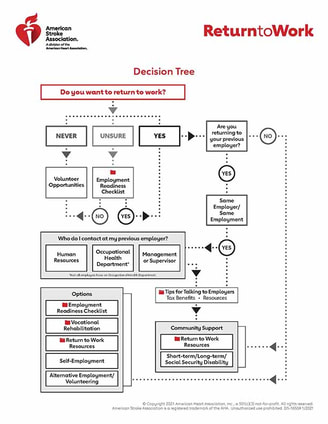
Do You Want to Return to Work?If you need help understanding a path forward regarding work this Decision Tree is a helpful tool from the American Stroke Association.
|
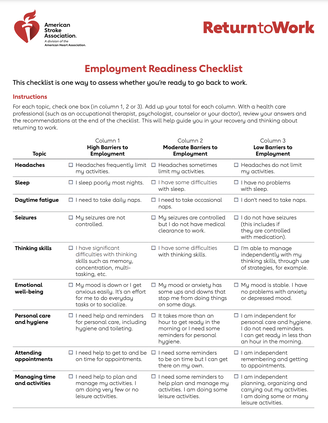
Employment Readiness ChecklistThis is a really great tool that helps you self-evaluate your level of work readiness. It would have helped me tremendously by taking the pressure off of me to know how my disabilities would impact me at work. In hindsight, I was objectively not ready to go back to work 6 months after my stroke.
|